What is the impact resistance of PU foam sealant?
As a supplier of PU Foam Sealant, I've witnessed firsthand the growing demand for high - performance sealants in various industries. One of the key properties that customers often inquire about is the impact resistance of PU foam sealant. In this blog, I'll delve into what impact resistance means for PU foam sealant, its influencing factors, and its real - world applications.
Understanding Impact Resistance
Impact resistance refers to a material's ability to withstand sudden forces or impacts without significant damage or loss of functionality. For PU foam sealant, this means that when it is subjected to a sudden blow, such as a physical strike or a shockwave, it should maintain its integrity and continue to perform its sealing function.
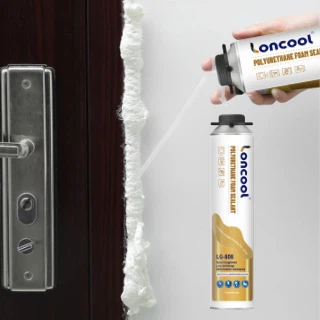

PU foam sealant is a versatile material used in many applications, including construction, automotive, and aerospace. In these industries, the sealant may be exposed to various impact scenarios. For example, in construction, the sealant in a building's joints may be hit by tools during construction or maintenance work. In the automotive industry, the sealant used in car bodies may experience impacts from road debris or minor collisions.
Factors Affecting the Impact Resistance of PU Foam Sealant
Chemical Composition
The chemical formulation of PU foam sealant plays a crucial role in determining its impact resistance. Polyurethane is a polymer formed by the reaction of polyols and isocyanates. Different types of polyols and isocyanates can be used, and the ratio between them can also vary. A well - balanced formulation can result in a sealant with better impact - absorbing properties. For instance, using high - molecular - weight polyols can increase the flexibility of the foam, which in turn enhances its ability to dissipate impact energy.
Density
The density of PU foam sealant is another important factor. Generally, higher - density foams tend to have better impact resistance. A denser foam has more material per unit volume, which can provide more resistance to deformation under impact. However, increasing the density too much may also make the foam more brittle, reducing its overall performance. Therefore, finding the optimal density is essential for achieving the best impact resistance.
Curing Conditions
The way the PU foam sealant cures can significantly affect its impact resistance. Proper curing is necessary for the polymer chains to form a strong and stable network. If the curing process is too fast, the foam may not have enough time to develop its full mechanical properties, resulting in lower impact resistance. On the other hand, if the curing is too slow, the foam may be more susceptible to damage during the curing period. Temperature and humidity are also important environmental factors during curing. For example, curing at a higher temperature can accelerate the reaction, but it may also cause the foam to shrink or develop internal stresses, which can negatively impact its impact resistance.
Testing Impact Resistance
There are several standard testing methods to evaluate the impact resistance of PU foam sealant. One common method is the Charpy impact test. In this test, a notched specimen of the sealant is placed in a pendulum - type impact tester. The pendulum is released, and it strikes the specimen. The energy absorbed by the specimen during the impact is measured, which gives an indication of its impact resistance.
Another method is the drop - weight test. A weight is dropped from a certain height onto a sample of the sealant. The height from which the weight is dropped and the mass of the weight can be adjusted to simulate different impact scenarios. By observing the damage to the sealant after the impact, such as cracking or delamination, the impact resistance of the sealant can be assessed.
Real - World Applications and the Importance of Impact Resistance
Construction
In the construction industry, PU foam sealant is widely used for sealing gaps and joints in buildings. Impact resistance is crucial in this application because the sealant may be exposed to accidental impacts during construction or renovation. For example, when installing windows or doors, workers may accidentally hit the sealant with tools. A sealant with good impact resistance can prevent damage to the seal, ensuring that it continues to provide an effective barrier against air, water, and dust infiltration. This helps to maintain the energy efficiency of the building and prevent moisture - related problems such as mold growth.
Automotive
In the automotive industry, PU foam sealant is used for various purposes, including sealing body panels, doors, and windows. The sealant needs to withstand the vibrations and impacts experienced during normal driving. Road debris, such as stones or gravel, can hit the car body and potentially damage the sealant. A high - impact - resistant sealant can protect the interior of the car from water and noise intrusion, improving the overall comfort and durability of the vehicle.
Aerospace
In the aerospace industry, the requirements for impact resistance are even more stringent. The sealants used in aircraft need to withstand high - speed impacts from foreign objects, such as birds or debris during flight. A failure of the sealant due to impact can compromise the structural integrity of the aircraft and pose a serious safety risk. Therefore, aerospace - grade PU foam sealants are designed to have extremely high impact resistance to ensure the safety and reliability of the aircraft.
Conclusion
The impact resistance of PU foam sealant is a critical property that determines its performance in various applications. As a supplier, we understand the importance of providing high - quality sealants with excellent impact resistance. By carefully controlling the chemical composition, density, and curing conditions, we can produce PU foam sealants that meet the diverse needs of our customers in different industries.
If you are in need of a reliable PU foam sealant with high impact resistance for your project, we are here to help. Our team of experts can provide you with detailed product information and technical support. We invite you to contact us for procurement and to discuss how our PU foam sealant can meet your specific requirements.
References
- ASTM International. (Year). Standard test methods for impact resistance of plastics and electrical insulating materials.
- ISO (Year). International standards for testing the mechanical properties of polymers, including impact resistance.
- Textbooks on polymer science and engineering, which cover the properties and applications of polyurethane materials.