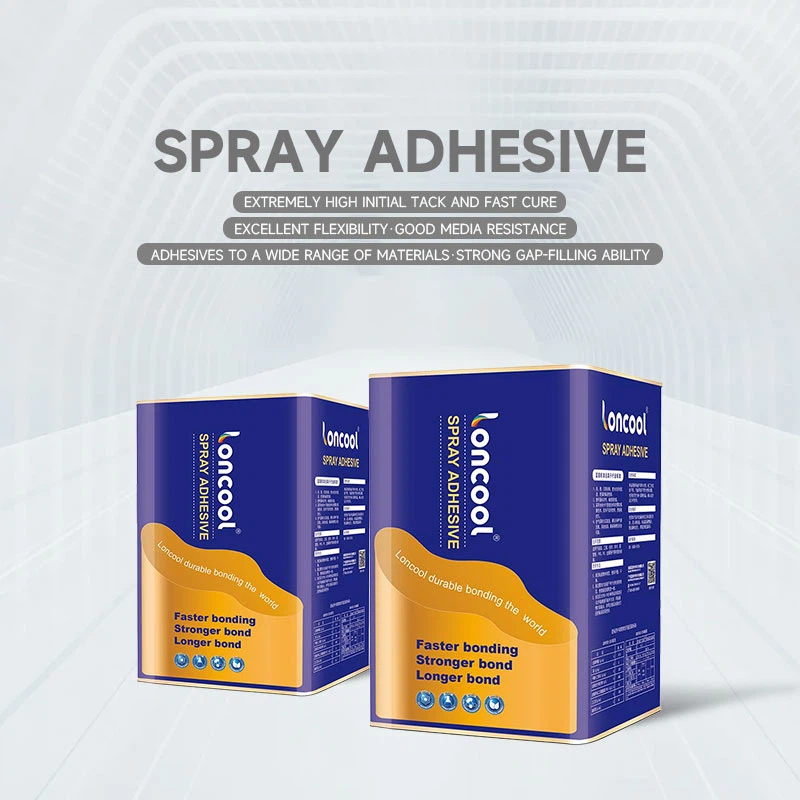
Hey there! As a supplier of MS Silicone Sealant, I get this question a lot: "How much MS silicone sealant do I need for my project?" Well, don't worry, 'cause I'm gonna break it down for you in this blog.
First off, let's talk a bit about what MS Silicone Sealant is. MS Silicone Sealant is a top - notch product that combines the best of both worlds. It's based on MS Polymer, which gives it some really cool properties. This sealant is super flexible, has great adhesion, and is resistant to weathering, making it perfect for a whole bunch of projects. Whether you're working on a small DIY job at home or a big - scale construction project, MS Silicone Sealant can be your go - to solution.
Now, onto the main question. Calculating how much sealant you need depends on a few factors. The first and most obvious one is the size of the area you're going to seal. Let's say you're sealing the joints around a window. You'll need to measure the length of all the joints. If the window frame has four sides, measure each side and then add them up. For example, if one side is 3 feet long, and the window is square, the total length of the joints would be 3 x 4 = 12 feet.
But it's not just about the length. The width and depth of the joint also matter. Most joints in construction projects have a standard width and depth. A common width for a joint might be 1/4 inch to 1/2 inch, and the depth could be around 1/4 inch as well. The wider and deeper the joint, the more sealant you're gonna need.
Let's do a simple calculation for a joint. The volume of sealant needed for a linear joint can be calculated using the formula: Volume = Length x Width x Depth.


Suppose you have a joint that's 10 feet long (which is 120 inches), 1/4 inch wide, and 1/4 inch deep. The volume would be 120 x 0.25 x 0.25 = 7.5 cubic inches.
Now, different sealant products come in different sizes. Some tubes of MS Silicone Sealant might hold 10 ounces, while others could be 20 ounces. You need to convert the volume you calculated into the units of the sealant product you're using.
An ounce is approximately 1.8 cubic inches. So, if our calculated volume is 7.5 cubic inches, dividing 7.5 by 1.8 gives us about 4.17 ounces. So, for this particular joint, you'd need a bit more than 4 ounces of sealant.
If you're working on a larger project, like sealing the expansion joints in a concrete patio, things get a bit more complicated. You'll have multiple joints, and they might have different lengths, widths, and depths. In this case, you'll need to measure each joint separately, calculate the volume for each one, and then add all the volumes together.
Another factor to consider is waste. When you're applying the sealant, there's always gonna be some waste. You might get some excess on the edges, or there could be some left in the tube that you can't use. As a general rule of thumb, it's a good idea to add about 10% - 15% to your calculated volume to account for waste.
Let's say you calculated that you need 50 ounces of sealant for all the joints in your project. Adding 15% for waste, you'd need 50 + (50 x 0.15)= 50+7.5 = 57.5 ounces. So, you'd probably want to buy a 60 - ounce tube or two 30 - ounce tubes.
Now, if you're working on a project that involves sealing a large area, like a bathtub surround, you're not just dealing with linear joints. You might have to seal the edges where the bathtub meets the wall, and also any seams in the surround material. For these types of projects, it's a good idea to break the area down into smaller, more manageable sections and calculate the volume of sealant needed for each section.
For example, if the bathtub surround has three walls, measure the length and height of each wall where the sealant will be applied. Then, measure the width and depth of the joint as before. Calculate the volume for each wall section and then add them up.
When it comes to more complex projects, like sealing a swimming pool, you'll have to account for the shape of the pool. Pools can be rectangular, oval, or even custom - shaped. You'll need to use more advanced geometric formulas to calculate the volume of sealant needed for the joints around the pool.
If you're not confident in doing these calculations yourself, don't worry. Our team of experts is here to help. We've got years of experience in the industry, and we've helped countless customers figure out how much MS Silicone Sealant they need for their projects.
We offer a wide range of MS Silicone Sealant products to suit different needs. Whether you need a fast - curing sealant for a quick job or a high - performance sealant for a long - term project, we've got you covered.
So, if you're planning a project and need to know how much MS Silicone Sealant to buy, just reach out to us. We can work with you to calculate the exact amount you need, and we'll make sure you get the right product for your project. Contact us today to start the conversation about your project and get the best deal on our high - quality MS Silicone Sealant.
References
- Construction Sealant Handbook: A guide to understanding and using sealants in construction projects.
- Manufacturer's product specifications for MS Silicone Sealant, which provide details on product volume and application guidelines.