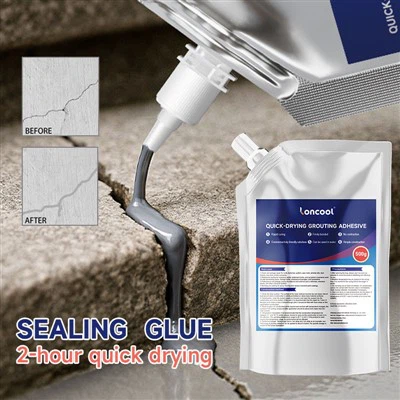
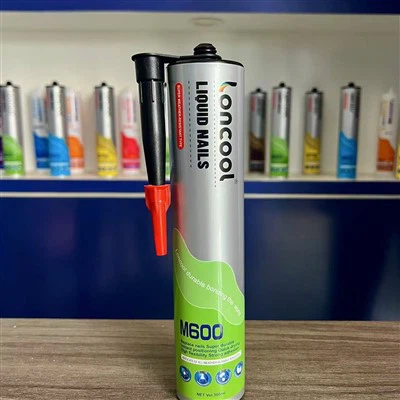
Nail-free glue, often called the "liquid nail," stands out in the construction industry for its exceptional adhesion and versatility. It not only simplifies the construction process but also offers unique advantages as an ideal alternative to traditional nails. It is highly effective in the installation of a variety of building materials, both indoors and outdoors, making construction simple and efficient. Installation is effortless, eliminating the need for cumbersome tools like drills, hammers, or expansion nails. Its quiet and dust-free nature makes the construction process both quiet and environmentally friendly. Furthermore, nail-free glue can fill gaps in joints, allowing for adjustment during installation, making installation more flexible and effortless.
1. Nail-free glue's bonding speed is extremely fast, measured in seconds.
2. Its bond strength reaches 3 MPA, equivalent to a load of 30 kg per square centimeter.
3. Nail-free glue has a wide range of applications, suitable for nearly every construction scenario. 4. This glue is environmentally friendly and odorless, and its solvent content is strictly controlled below 13%, ensuring safe use.
5. Nail-free glue has a shelf life of over 24 months, ensuring long-term use.
6. It is easy to apply and can be scraped or applied directly to meet different needs.
Next, let's compare the differences between nail-free glue and glass glue. Nail-free glue primarily serves a bonding and positioning function, such as for attaching mirrors to walls or fixing various decorative materials. Glass glue, on the other hand, focuses on sealing and preventing leaks, and is commonly used in home decoration applications such as windows, window sills, sanitary ware, and toilets. Glass glue, with its mildew-resistant properties, is particularly effective in humid environments such as bathrooms and kitchens.
Nail-free glue has a wide range of applications, playing an important role in both new home construction and renovation. It is commonly used for installing door and window frames, stairs, skirting, wall skirting, plaster molding, and other applications, as well as fixing various decorative materials and stone. It can be used on a variety of surface materials, including wood, ceramic, metal, and concrete. There are two main methods for applying nail-free adhesive: dry bonding and wet bonding. Dry bonding involves squeezing the adhesive in a zigzag pattern, allowing the adhesive to evaporate before pressing the two surfaces together. Wet bonding requires clamping or screwing the two surfaces together. Wait 24 hours, remove the clamps, and allow the adhesive to set completely for 1-3 days. For heavy-duty materials, apply adhesive and press, then separate. Wait 5 minutes, then press again and tap firmly. Nail-free adhesive can also be used for ceramic tiles, but ensure the wall or tiles are clean to ensure optimal adhesion.