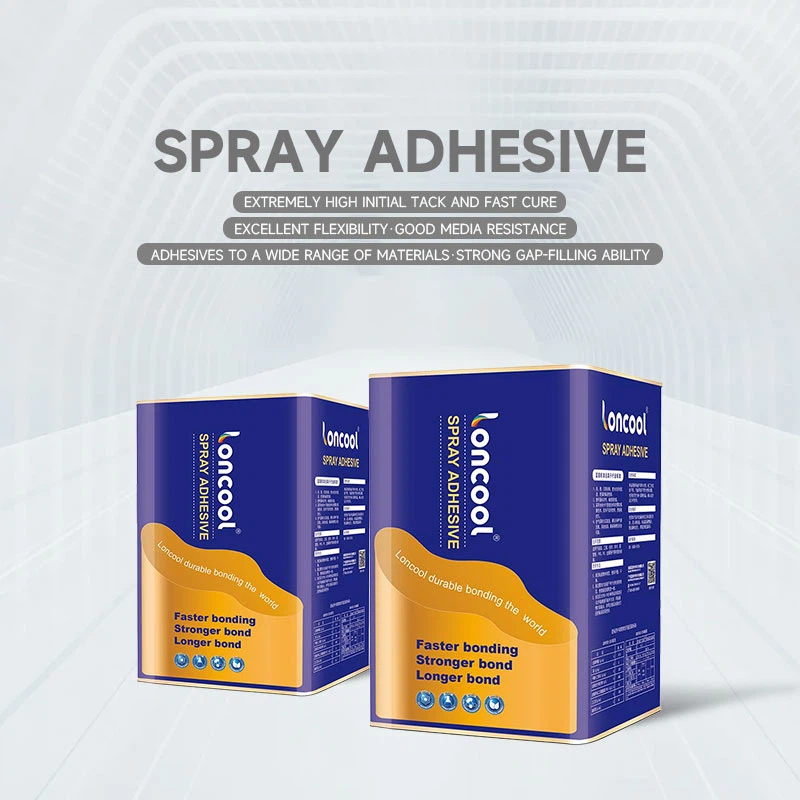
Hey there! As a spray adhesive supplier, I often get asked all sorts of questions about our products. One query that pops up quite a bit is, "Does spray adhesive work on rubber?" Well, let's dive right into this topic and find out.
First off, we need to understand a bit about rubber. Rubber is a unique material. It comes in different types - natural rubber, synthetic rubber like neoprene, nitrile, and silicone rubber. Each type has its own set of properties, such as flexibility, resistance to heat, chemicals, and weather. These properties can have a big impact on how well a spray adhesive will bond to the rubber.
Let's start with natural rubber. It's a fairly porous material, which can be a plus when it comes to using spray adhesive. The adhesive can seep into those tiny pores, creating a stronger mechanical bond. However, natural rubber also contains some natural oils and antioxidants. These can sometimes act as a barrier, preventing the adhesive from fully adhering to the rubber surface. So, if you're using a spray adhesive on natural rubber, it's a good idea to clean the rubber surface thoroughly first. You can use a mild solvent to remove any dirt, oils, or contaminants. This will give the adhesive a better chance of bonding properly.
Now, synthetic rubbers are a bit different. Neoprene, for example, is known for its good chemical resistance and durability. It's often used in automotive, industrial, and marine applications. When using a spray adhesive on neoprene, you need to choose an adhesive that is compatible with its chemical composition. Some spray adhesives are specifically formulated to bond with neoprene. These adhesives usually have good flexibility and can withstand the movement and vibrations that neoprene parts might experience.
Nitrile rubber is another popular synthetic rubber. It's highly resistant to oils and fuels, making it a favorite in the automotive and aerospace industries. Like neoprene, nitrile rubber requires a compatible spray adhesive. The adhesive needs to be able to penetrate the rubber's surface and form a strong bond. One thing to note is that nitrile rubber can be a bit more rigid than some other rubbers. So, the adhesive you choose should also have some degree of flexibility to prevent the bond from breaking under stress.
Silicone rubber is a whole different ballgame. It has excellent heat resistance, weather resistance, and electrical insulation properties. But it's also very non - reactive and has a low surface energy. This means that getting a spray adhesive to bond to silicone rubber can be quite challenging. However, there are some specialized spray adhesives available that are designed to work with silicone rubber. For example, Spray Silicone is a type of spray adhesive that can provide a good bond on silicone rubber surfaces. These adhesives usually contain special additives that can increase the surface energy of the silicone rubber, allowing the adhesive to stick better.
When it comes to actually using spray adhesive on rubber, there are a few steps you should follow. First, make sure the rubber surface is clean and dry. As I mentioned earlier, any dirt, oils, or moisture can prevent the adhesive from bonding properly. Next, shake the spray adhesive can well. This ensures that the adhesive components are evenly mixed. Then, hold the can about 6 - 8 inches away from the rubber surface and spray in a smooth, even motion. It's important not to spray too much or too little. Too much adhesive can cause it to run or create a messy bond, while too little might not provide a strong enough bond.
After spraying the adhesive on the rubber, you usually need to wait for a short period of time for the adhesive to become tacky. This is called the open time. The open time can vary depending on the type of adhesive and the environmental conditions. Once the adhesive is tacky, you can press the two surfaces together firmly. Apply even pressure across the entire bond area to ensure a good, strong bond.

Now, let's talk about some factors that can affect the performance of spray adhesive on rubber. Temperature and humidity are two important factors. Most spray adhesives work best at room temperature (around 70°F or 21°C) and moderate humidity (around 50%). If it's too hot, the adhesive might dry too quickly, which can lead to a weak bond. On the other hand, if it's too cold, the adhesive might not dry properly or might become too thick to spray evenly. High humidity can also cause problems, as the moisture in the air can interfere with the bonding process.
Another factor is the type of application. If you're using the rubber in a high - stress environment, such as in a machine or a vehicle, you need to choose a spray adhesive that can withstand the stress. Some adhesives are designed for light - duty applications, while others are formulated for heavy - duty use.
So, does spray adhesive work on rubber? The answer is yes, but it depends on a few things. You need to choose the right type of spray adhesive for the specific type of rubber you're working with. You also need to follow the proper application procedures and take into account the environmental conditions.
If you're in the market for spray adhesive for your rubber projects, we've got you covered. We offer a wide range of spray adhesives that are suitable for different types of rubber. Whether you're working with natural rubber, neoprene, nitrile, or silicone rubber, we have an adhesive that can get the job done. Our team of experts is always here to help you choose the right product for your needs.
If you're interested in learning more about our spray adhesives or want to discuss your specific requirements, don't hesitate to reach out. We're eager to start a conversation and help you find the perfect adhesive solution for your rubber applications. Contact us today to get started on your bonding project!
References
- "Handbook of Adhesives" - A comprehensive guide on adhesives and their applications.
- Manufacturer's technical data sheets for spray adhesives and rubber materials.