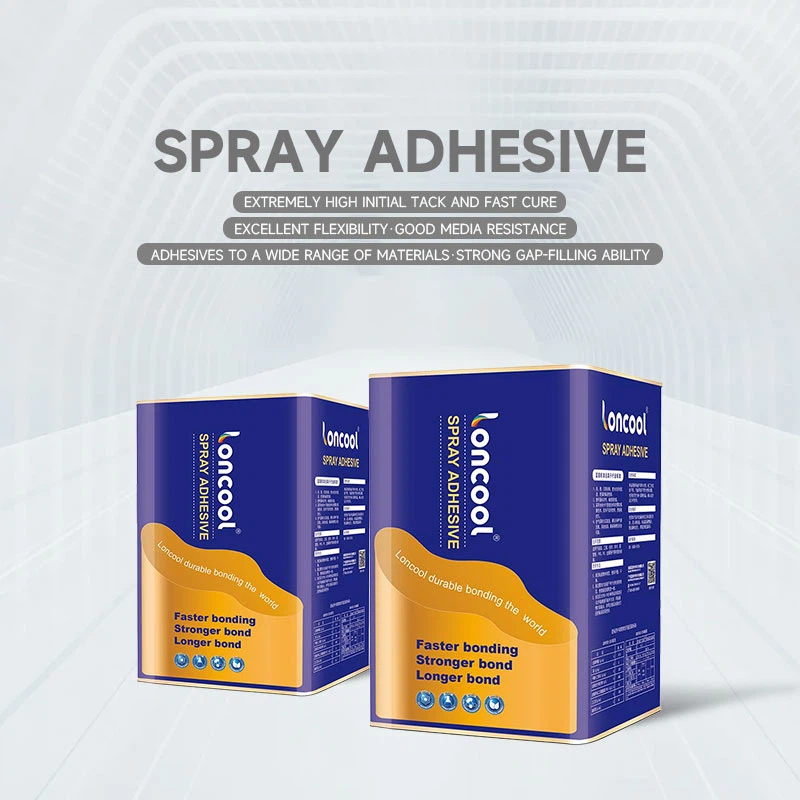
Hey there! As a spray adhesive supplier, I often get asked a bunch of questions about the uses and applications of our products. One question that comes up quite frequently is, "Can spray adhesive be used for bonding foam to metal?" In this blog, I'm going to dig deep into this topic, share some insights, and give you the low - down on whether it's a good idea or not.
Understanding the Basics of Spray Adhesive
First off, let's talk a bit about spray adhesive. It's a super convenient product that comes in a can and sprays out in a fine mist. The great thing about it is that it can cover a large area quickly, and it usually dries relatively fast. There are different types of spray adhesives out there, each with its own set of properties. Some are designed for general use, while others are formulated specifically for certain materials.
When it comes to bonding, spray adhesive works by creating a strong bond between two surfaces. It has to be able to adhere well to both materials to hold them together effectively. But not all spray adhesives are created equal, and choosing the right one is crucial, especially when you're trying to bond something like foam to metal.
Foam and Metal: A Tricky Pair?
Foam and metal are two very different materials. Foam is soft, porous, and lightweight, while metal is hard, dense, and often smooth. These differences in properties can make bonding them a bit of a challenge.
The porosity of foam means that the adhesive needs to be able to seep into the tiny holes and cells to create a good grip. On the other hand, metal surfaces can be smooth, which makes it harder for the adhesive to stick. Some metals also have a layer of oxidation on their surface, which can affect the bonding process.
Compatibility of Spray Adhesive with Foam and Metal
Now, the big question is whether spray adhesive can actually bond foam to metal. The answer is yes, but with some caveats.
There are spray adhesives that are formulated to work well with both foam and metal. These adhesives typically have good flexibility to accommodate the differences in the materials' expansion and contraction rates. For example, when the temperature changes, foam and metal will expand or contract at different speeds. A good spray adhesive will be able to withstand these movements without losing its bond.
Types of Foam and Their Bonding Requirements
Not all foams are the same. There are different types, such as polyurethane foam, polyethylene foam, and polystyrene foam, each with its own unique characteristics.
Polyurethane foam is one of the most common types used in various applications. It's relatively easy to bond with the right spray adhesive. Most high - quality spray adhesives can create a strong bond with polyurethane foam because they can penetrate its open - cell structure.
Polyethylene foam is a bit more challenging. It has a closed - cell structure, which means the adhesive has a harder time seeping in. You'll need a spray adhesive that is specifically designed for bonding to plastics or closed - cell materials.
Polystyrene foam is another type that requires special consideration. Some spray adhesives can actually dissolve or damage polystyrene foam. So, if you're working with polystyrene, make sure to choose a spray adhesive that is marked as safe for use with this material.
Types of Metal and Their Bonding Requirements
Similarly, different metals have different properties that can affect the bonding process. For example, aluminum is a lightweight metal that is prone to oxidation. Before applying spray adhesive, it's a good idea to clean the aluminum surface thoroughly to remove any oxidation or grease. This will help the adhesive bond better.
Steel is a strong and durable metal. However, like aluminum, it can also rust. If the steel has a rusty surface, you'll need to remove the rust before bonding. A clean, smooth surface will ensure a stronger bond with the spray adhesive.
Preparing the Surfaces
Proper surface preparation is key when using spray adhesive to bond foam to metal.
For the foam, you should make sure it's clean and dry. If there's any dust, debris, or moisture on the surface, it can prevent the adhesive from bonding properly. You can use a clean, dry cloth to wipe the foam surface.
For the metal, as I mentioned earlier, cleaning is crucial. You can use a mild detergent and water to clean the metal surface, followed by a thorough rinse and dry. If the metal has a lot of grease or oil on it, you may need to use a degreaser. After cleaning, you can also lightly sand the metal surface to create a rougher texture, which will help the adhesive stick better.
Applying the Spray Adhesive
Once the surfaces are prepared, it's time to apply the spray adhesive.
First, make sure you're in a well - ventilated area. Spray adhesives can give off fumes, so it's important to have good air circulation.
Shake the can of spray adhesive well before use. Hold the can about 6 - 8 inches away from the surface and spray in a steady, even motion. Make sure to cover the entire area that you want to bond.
For best results, apply the adhesive to both the foam and the metal surfaces. Let the adhesive dry for a few minutes until it becomes tacky. This is the ideal time to press the foam and the metal together firmly. Apply even pressure across the entire bonded area to ensure a strong bond.
Testing the Bond
After bonding, it's a good idea to test the bond. You can gently tug on the foam to see if it holds up. If the bond seems weak or if the foam starts to come loose easily, there may have been an issue with the surface preparation or the adhesive application.
If the bond is strong, you can leave the assembly to cure for a few hours to allow the adhesive to fully set. During this time, try to avoid any excessive movement or stress on the bonded area.
The Role of Spray Silicone
Now, let's talk about Spray Silicone. Spray silicone can sometimes be used in conjunction with spray adhesive when bonding foam to metal. It can act as a lubricant or a protective layer.
For example, if you're worried about the foam sticking too tightly to the metal in some areas and causing problems with expansion and contraction, you can apply a thin layer of spray silicone to the metal surface before applying the adhesive. This can create a bit of a buffer and allow for some movement between the two materials.
Benefits of Using Spray Adhesive for Bonding Foam to Metal
There are several benefits to using spray adhesive for bonding foam to metal.
One of the biggest advantages is the speed and ease of application. You can cover a large area quickly with a spray can, and it doesn't require any special tools or skills.
Spray adhesive also provides a relatively uniform bond across the entire surface. This helps to distribute the stress evenly, which is important when dealing with materials that have different expansion and contraction rates.
Potential Drawbacks
Of course, there are also some potential drawbacks.
One is that spray adhesives can be messy. If you're not careful, the overspray can get on other surfaces. You'll need to take precautions, such as using masking tape or a drop cloth, to protect the surrounding area.
Another drawback is that some spray adhesives may not have a long - term durability. Over time, the bond may weaken, especially if the assembly is exposed to extreme temperatures or harsh environmental conditions.
Conclusion
So, can spray adhesive be used for bonding foam to metal? The answer is a resounding yes, but it's important to choose the right type of adhesive, prepare the surfaces properly, and apply the adhesive correctly.


At our company, we offer a range of high - quality spray adhesives that are designed to work well with both foam and metal. Whether you're working on a small DIY project or a large - scale industrial application, we have the products to meet your needs.
If you're interested in learning more about our spray adhesives or have any questions about bonding foam to metal, we'd love to hear from you. Reach out to us for a friendly chat and let's explore how we can help with your bonding requirements.
References
- "Adhesive Technology Handbook", Third Edition, edited by Eric M. Petrie
- "Materials Science and Engineering: An Introduction", Eighth Edition, by William D. Callister, Jr. and David G. Rethwisch